Sold and installed in Torrance since 1984
New Tires for How You Drive
We'll help you choose tires for hot pavement, sudden rain and everything the South Bay throws at you. Our technicians install them and check the visible brake, steering and suspension parts while the wheels are off.
Phones are closed right now. Request a quote online any time. We'll reply during shop hours using your chosen contact method.
Brands we sell and install





Along with other major brands to match your budget.
Choosing tires
Tires for the way you drive
Two quick questions about how you drive and what matters to you. You'll get a starting point, with an optional video to explain it. We'll show you budget, better and best when you ask for a quote.
Alex brings years of tire experience to Hillside, including his time at Firestone.
Not sure which tires to choose? Call and ask for Alex.
For everyday paved driving, road-focused touring or highway all-seasons are a common place to start. We'll compare your vehicle's requirements with how you drive and what matters most to you.
- Rough roads: compare road-focused and all-terrain options. More aggressive tread may add road noise and reduce comfort on pavement.
- Snow or ice: compare all-weather tires with a 3PMSF mark and dedicated winter tires for frequent winter trips.
- Loads or towing: we'll check the tire size and load rating your vehicle and use require.
None chosen yet
Choose at least one to continue.
0 of 2 chosen
Choose at least one to see a starting point.
Your starting point
- Driving
- Priorities
Added to your quote request. Anything you've already entered there stays as it is.
Watch
Are you buying the wrong tires?
Engineering Explained breaks down how tire types differ and what you give up with each one. The guide above uses short clips from this video.
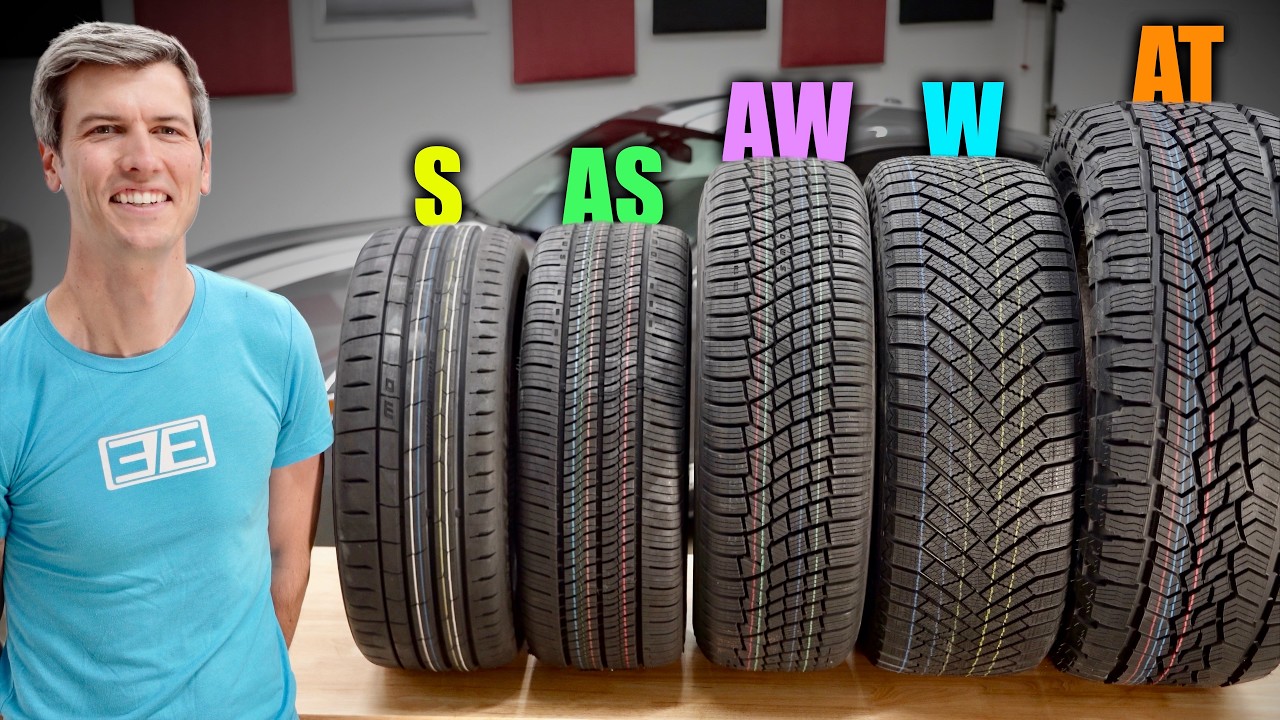
Video by Engineering Explained on YouTube. Hillside Auto Repair is not affiliated with this channel. Watch on YouTube.
Tire self-check
Do you need new tires yet?
Check your tires at home, at work or wherever you're parked. Here are a few ways to tell if they may need replacing soon.
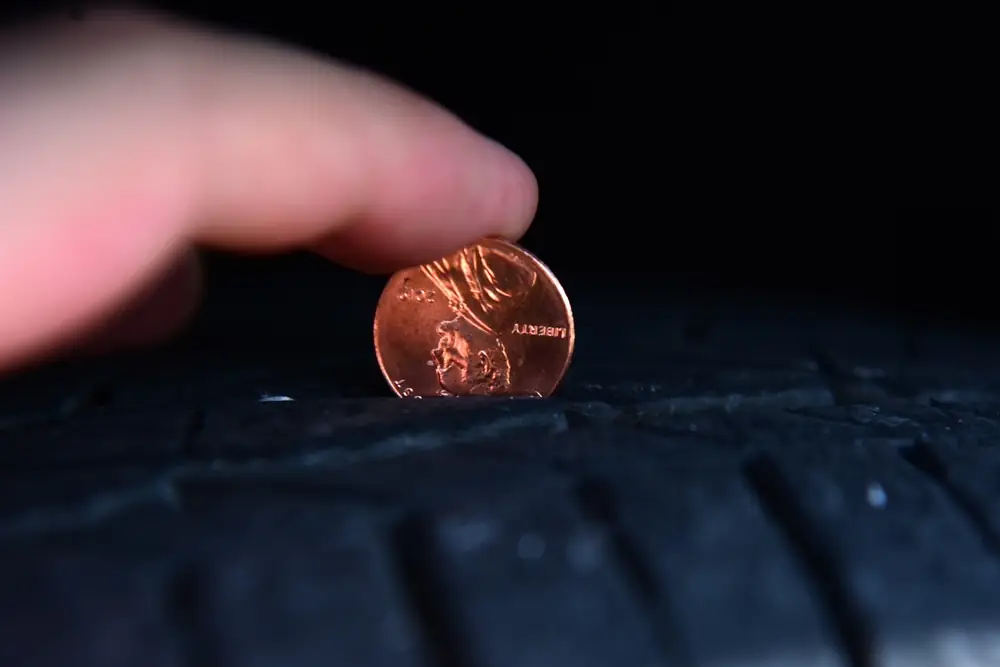
The penny test
- Put a penny in a tread groove, with Lincoln's head pointing down.
- Look at the top of his head.
- Can you see the top of his head? The tread is down to 2/32 inch or less. It's time for new tires.
- Is the top of his head hidden? There's more tread left. That's a good sign, but still look for the other signs below.
Also look for
-
Bulges, bubbles, cuts or cords on the side. Sidewall damage needs prompt assessment.
-
Cracks in the rubber. Dry rot is common on cars parked outside in Southern California sun.
-
Uneven wear or a new shake. One edge wearing faster, worn patches or a vibration. Alignment or balancing may be part of the fix.
-
Losing air. Check the pressure. If a tire keeps going low or the pressure light keeps coming back, have the tire and pressure-monitoring system checked.
Don't drive on a flat tire or one with a bulge or exposed threads. Arrange roadside help instead.
How old are your tires? Here's how to read the date code.
-
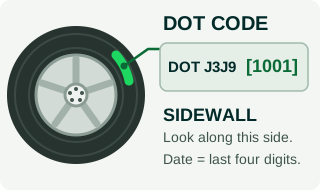
Find “DOT” on the tire's sidewall. Look along the side of the tire, between the tread and the wheel. A phone light helps. If you see DOT but no four-digit date, check the other side of the tire. We can help you find it at the shop.
-
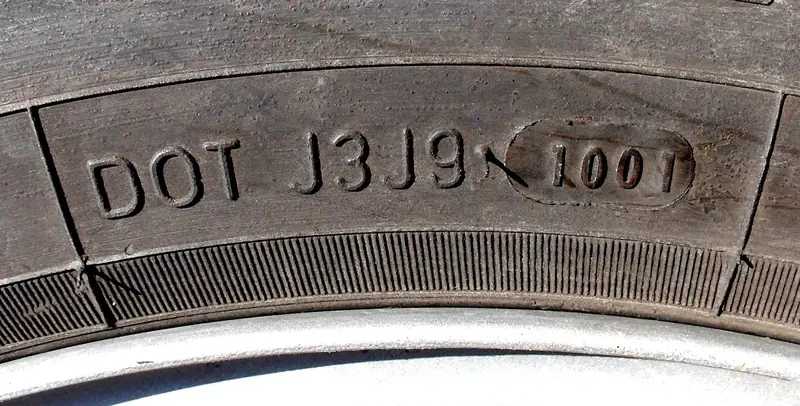
Example date code. 10week01yearWeek 10 of 2001Photo: Wualex, public domain. Circle added by Hillside.Read the last four digits. They're often inside a small oval. The first two are the week, the last two are the year.
Rubber ages even when the tread still looks good. Sun, heat and time can weaken a tire, reduce its grip and make it more likely to fail. You may not see the damage, even on a tire that has not been driven much.
Some car and tire makers recommend replacement at 6–10 years. Michelin recommends a professional check every year after five years of use, and replacement at 10 years from the date the tire was made, even if the tread looks good. Follow your car's and tire maker's guidance if they call for replacement sooner.
NHTSA tire-age guidance · Michelin's inspection and replacement guidance
Installation, and the car it goes on
What's included with a tire purchase
- MountingFitting the new tires to your wheels.
- BalancingBalancing the new tires to help prevent shaking.
- Final checksTightening the wheel nuts or bolts to the correct setting, then test-driving the car.
If tires bought and installed here need their balance corrected, we'll take care of it at no charge. Routine later rotations or re-balancing aren't automatically included; ask us about those.
Help your new tires wear evenly
Uneven wear can point to a tire-pressure or suspension problem. With every new set, we check tire pressure and look over suspension components. If we see a concern, we'll explain what it could mean for your new tires.
Rotations every 5,000-8,000 miles (easy to pair with your oil change) help your tires wear evenly.
More on wheel alignment, oil change and inspection and steering and suspension.
- Free 5-mile shuttleAsk the front desk about your destination and return pickup.
- Open Saturdays 9-3Plan a weekend visit. Weekday pick-ups until 6 PM.
- Lydia, Aatif and AlexThe front desk follows up on your request. Ask for any of them by name.
What does a tire warranty cover?
There are a few kinds of tire coverage. Here is what to look for when you compare your options.
If the tread wears out early
Mileage warranties run from 20,000 to 85,000 miles, depending on the tire.
Some tires have a mileage warranty. Examples range from 20,000 to 85,000 miles, depending on the tire. Some tires have no mileage warranty.
If the tread wears out evenly before that limit, the tire maker may offer a lower-price replacement. What you pay depends on how much use you got from the tire and the tire maker's rules.
Keep your receipt and tire-rotation records. The mileage number is the warranty coverage that the tire maker gives with the sale of their tire. It does not indicate that the tire will last that long.
If the tire has a factory problem
Many tire makers cover materials and workmanship for up to five or six years.
Many tire makers cover certain problems with the materials or how the tire was made for up to five or six years, or until the usable tread wears out, whichever comes first.
An approved replacement may be free early on, then cost you part of the price later. The exact time limit and costs depend on the tire.
If you get a flat or hit a pothole
Road-hazard plans are sold separately; coverage and fees vary.
Nails, cuts and pothole damage can affect tire condition. Some sellers offer a separate road-hazard plan.
A plan may help with the cost of replacement after covered damage, but coverage, fees and time limits vary. Ask what applies to the tires you are considering.
If you notice a nail, cut, bulge or exposed cords, have the tire condition assessed. Do not drive on a flat or visibly damaged tire.
We'll help you understand the tire maker's coverage for the tires you're considering. Bring up any questions about flats or road-hazard plans when we talk through your quote.
Warranty details: Michelin, Goodyear, Firestone and Uniroyal
In their words
From our tire customers
What a few Hillside tire customers wrote in their Google reviews, from tracking down a hard-to-find set to putting on four new tires.
“No one in the southbay could locate tires for my BMW M4 only Aatif was able to pull thru!”
Eddie · GoogleTire sourcing · Review excerpt
“Gave a great deal on installation of 4 new tires for my Subaru and service was fantastic.”
Alistair Muller · GoogleFour-tire installation · Historical review
“Yesterday, I had Hillside put on four new tires on my Mercedes. I was given excellent service”
Jane Noll · GoogleFour-tire purchase · Historical review excerpt
Tire questions, answered
A few things to know before your next set.
What does the tire-pressure light mean?
A steady tire-pressure light usually means one or more tires need air. Check the pressure with a gauge and use the cold tire pressures on your car's door-jamb sticker, not the maximum pressure printed on the tire.
Still on after you've filled the tires? If the pressures are correct, follow your owner's manual for any reset or relearn steps. If the light stays on or returns, have the tires and pressure-monitoring system checked. A sensor fault is one possible cause. A light that flashes at startup and then stays on can also signal a system fault.
We can check the tire-pressure monitoring system, replace a faulty sensor, and reset or relearn the sensors when needed.
A warning light alone does not mean you need new tires. If a tire keeps losing air, have its condition checked promptly. Do not drive on a flat or visibly damaged tire.
Do you sell tires for trucks?
Yes. We can handle car and truck tires. Farm-equipment wheels and tires, such as tractor tires, are too large for our equipment.
How do I get a price for new tires?
Enter your tire size in our tire quote form. Choose text, email or a call. Lydia, Aatif or Alex will reply during shop hours to discuss tire options and pricing.
Can you install tires the same day?
If our supplier has your tires in stock, we can order and install them the same day. The usual order cutoff is 10 AM. Our supplier does not deliver on Saturdays, so same-day ordering and installation is not available that day. Already ordered your tires? Ask us about Saturday installation.
What comes with free tire installation?
Free installation with any tire purchase at Hillside, including one tire. Mounting and balancing are included. Wheel alignment, if needed, is an additional $199. One offer per visit. Cannot be combined with other offers. See the offer details.
Can I replace just one or two tires on an AWD vehicle?
Sometimes. It depends on your vehicle and how much tread is left on the other tires. AWD systems can need the tires to be closely matched. We'll explain whether replacing one or two makes sense for your car.
What about tire warranties and road-hazard coverage?
Tire warranties vary by manufacturer and the tires you choose. We'll help you understand the coverage for the options you're considering and talk through questions about road-hazard coverage. More about tire coverage.
Since 1984, the honest tire counter
Just the right tires at a fair price, installed right, from the shop that also stands behind the rest of your car. That's why generations of Torrance drivers buy their tires where they get their repairs.
Tire coverage comes from the tire manufacturer. Repairs on the rest of your car, like brakes, steering and suspension, are backed by our 2-year / 24,000-mile repair warranty.*
Phones are closed right now. Request a quote online any time. We'll reply during shop hours using your chosen contact method.
Want to book a different service or repair? Schedule an appointment.