
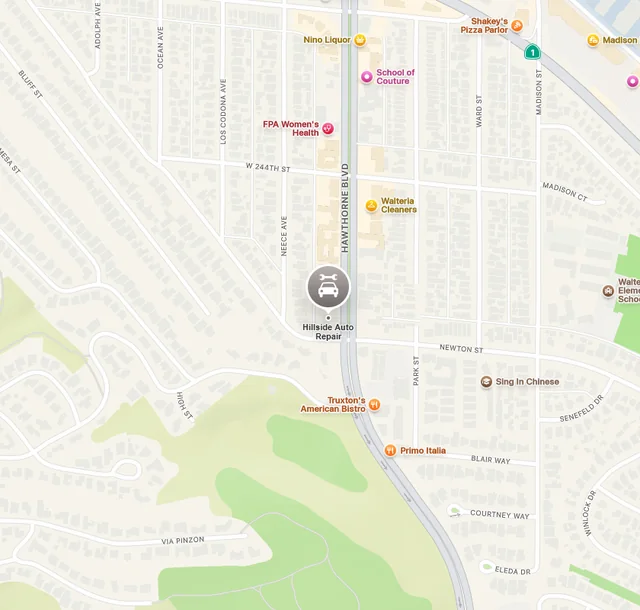
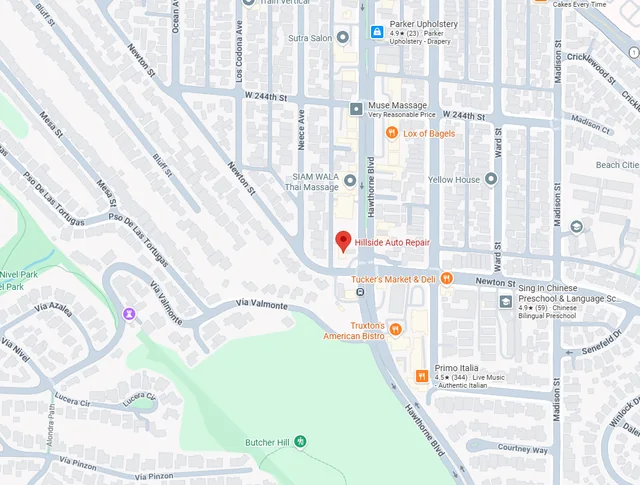
When power steering starts failing, the car tells you immediately: a whine when you turn, a wheel that fights back at parking speeds, a spreading spot on the driveway. The pump is the heart of a hydraulic steering system - and power steering fluid leaks are the most common way the whole system announces trouble. Hillside Auto Repair has fixed both, properly, for four decades of Torrance drivers.
Power steering leak repair - start here
Caught early, a power steering leak is often a hose, a clamp, or a seal - modest fixes. Ignored, the pump runs low, starves, overheats, and fails, turning a small repair into pump replacement (and sometimes rack damage beyond it). If you're topping off the reservoir more than once, the leak has already earned an inspection - with photos of exactly what we find.
The three power steering systems we service
- Hydraulic (HPS) - the engine-driven pump and pressurized fluid: classic, strong, and leak-prone with age
- Electric (EPS) - motor-and-sensor assist with no fluid; failures are electronic and demand real diagnostics
- Electro-hydraulic - the transitional hybrid: an electric motor driving a hydraulic pump; we speak both dialects
Signs your pump needs repair
- Whining, groaning, or squealing when turning - the classic failing-pump soundtrack
- Stiff or heavy steering, worst at low speed and parking
- Fluid leaks near the pump, hoses, or rack
- Steering assist that comes and goes
- A shrieking belt when you turn the wheel to full lock
How we confirm the pump
Hard steering and pump noise have look-alikes: a low reservoir, a slipping belt, a clogged line, a failing rack. Replacing the pump without checking those is a coin flip. We verify fluid level and condition, belt tension, and pressure at the pump before we call it - and when the pump has genuinely failed, we replace it, flush the contaminated fluid it left behind, and bleed the system until the steering is quiet and light again.
What pump replacement includes
- Pressure and condition testing before the pump is condemned
- Quality replacement pump for your vehicle
- System flush - debris from a failed pump will take out its replacement
- Belt checked, system bled, effort verified lock-to-lock
- Backed by the 2-year / 24,000-mile warranty like everything we do
I topped off the fluid but the whine came back - why?
Because the fluid keeps leaving. A reservoir that needs regular topping off has a leak, and a pump that's been run low has been wearing itself out on air. Fix the leak first; sometimes the pump survives, and we'll tell you honestly when it has.
Is it the pump or the rack?
Noise and stiffness lean pump; wander, uneven effort side to side, or fluid at the rack boots lean rack. The pressure test separates them without guesswork - which matters, because they're very different repairs and you shouldn't pay for both when one failed.
Honest fixes, in the right order
We diagnose before we replace: sometimes it's fluid and a seal, sometimes a hose, sometimes the pump itself - and when it is the pump, we replace it with quality parts, flush the system, and verify the fix. The most cost-effective, longest-lasting repair, not the biggest ticket. Every job backed by the 2-year / 24,000-mile written warranty, for every make we service across the South Bay.